What Is a Pier and Beam Foundation?
A pier and beam foundation (also called pier and post, or post and beam) elevates a home 18 to 24 inches above the ground on a network of concrete piers, wooden posts, and horizontal beams. Unlike a slab foundation, which sits directly on the soil, pier and beam construction creates a crawl space beneath the house that allows access to plumbing, electrical, and HVAC systems.
This foundation type was the standard for residential construction across much of the United States through the 1960s. Homes built before 1970 in the South, Southeast, and parts of the Midwest are especially likely to sit on pier and beam foundations. Today, pier and beam remains common in coastal areas, flood zones, sloped lots, and regions with expansive clay soils where slab foundations are prone to shifting.
If your home has visible floor vents, a crawl space hatch, or sits noticeably above ground level, it almost certainly has a pier and beam foundation.
How Pier and Beam Foundations Work
The system has three main structural components that work together to transfer the weight of your home to stable soil below.
- Piers (footings): Concrete pads or columns set into the ground at regular intervals, typically every 6 to 8 feet. These carry the vertical load down to stable soil or bedrock. In older homes, piers may be stacked cinder blocks, brick, or even cedar posts.
- Beams (girders): Heavy horizontal timbers -- typically 4x6, 6x6, or steel I-beams -- that span between piers. These distribute the load of the floor system across multiple piers.
- Joists: Smaller dimensional lumber (usually 2x8 or 2x10) that run perpendicular to the beams, supporting the subfloor and finished flooring above. Joists are spaced 12 to 16 inches apart.
The crawl space created by this system is both a benefit and a vulnerability. It provides easy access for repairs and upgrades, but it also exposes structural wood to moisture, pests, and airflow that can cause deterioration over time.
Common Problems With Pier and Beam Foundations
Most pier and beam issues develop gradually over years or decades. Early detection matters -- a problem that costs $1,500 to fix today can become a $10,000 structural repair if left unaddressed. Here are the most common issues contractors see.
Settling or Shifting Piers
Soil erosion, drought cycles, or poor original construction can cause individual piers to sink, tilt, or shift laterally. When one pier drops even half an inch, it creates uneven stress across the entire beam and joist system. The result: sloping floors, sticky doors, and visible cracking in drywall or exterior brick.
Rotting Beams and Joists
Wood rot is the single most common pier and beam problem. Beams and joists that sit in a damp, poorly ventilated crawl space absorb moisture from the soil, condensation, and plumbing leaks. Over time, the wood softens and loses structural integrity. You can often detect rot by pressing a screwdriver into the wood -- if it penetrates more than a quarter inch, the member is compromised.
Moisture and Standing Water
A crawl space with standing water or persistent dampness creates a cascade of problems: wood rot, mold growth, pest infestations, and musty odors that migrate into living spaces. Grading issues, poor drainage, plumbing leaks, and inadequate vapor barriers are the usual culprits.
Sagging or Bouncy Floors
When you feel a noticeable dip in the middle of a room or the floor bounces when you walk, joists or beams are failing. Causes include undersized lumber for the span, termite damage, rot, or an inadequate number of support piers for the load.
Termite and Pest Damage
Subterranean termites thrive in the warm, damp conditions common to crawl spaces. They can silently destroy beams and joists from the inside out. Annual termite inspections are not optional for pier and beam homes -- they are essential preventive maintenance.
Floors sloping more than 1 inch over 15 feet, doors or windows that suddenly stop closing, new cracks appearing in brick exterior, or a musty smell in the crawl space that was not there before. Any of these warrant a professional inspection within days, not months.
Pier and Beam Repair Methods
The right repair depends on what is actually wrong. A structural engineer or experienced foundation contractor will inspect the crawl space and recommend one or more of the following approaches.
Shimming
The simplest and least expensive repair. Steel, composite, or hardwood shims are wedged between piers and beams to correct minor settling -- typically less than an inch. Shimming is a targeted fix for one or two piers that have dropped slightly. It does not address the underlying cause of settlement, so it works best when the soil has stabilized and further movement is unlikely.
Typical cost: $75-$300 per pier
Sistering Joists
When individual floor joists are weakened by rot, termite damage, or cracking, contractors "sister" new lumber alongside the damaged members. The new joist is bolted or nailed to the existing one, effectively doubling the structural capacity at that point. This is a reliable repair when damage is limited to specific joists rather than widespread.
Typical cost: $100-$300 per joist
Beam Replacement
If the main beams (girders) show significant rot, splitting, or crush damage, they need full replacement. The contractor temporarily supports the floor with jacks, removes the damaged beam, and installs a new treated lumber or steel beam. This is major structural work that requires an experienced crew and often a structural engineering report.
Typical cost: $1,500-$5,000+ per beam
Pier Replacement or Addition
Piers that have cracked, crumbled, or sunk beyond correction need replacement. The contractor pours new concrete footings and piers at the correct elevation. In many cases, additional piers are added between existing ones to reduce the span between supports and prevent future sagging.
Typical cost: $250-$500 per pier
Steel or Concrete Pressed Pilings
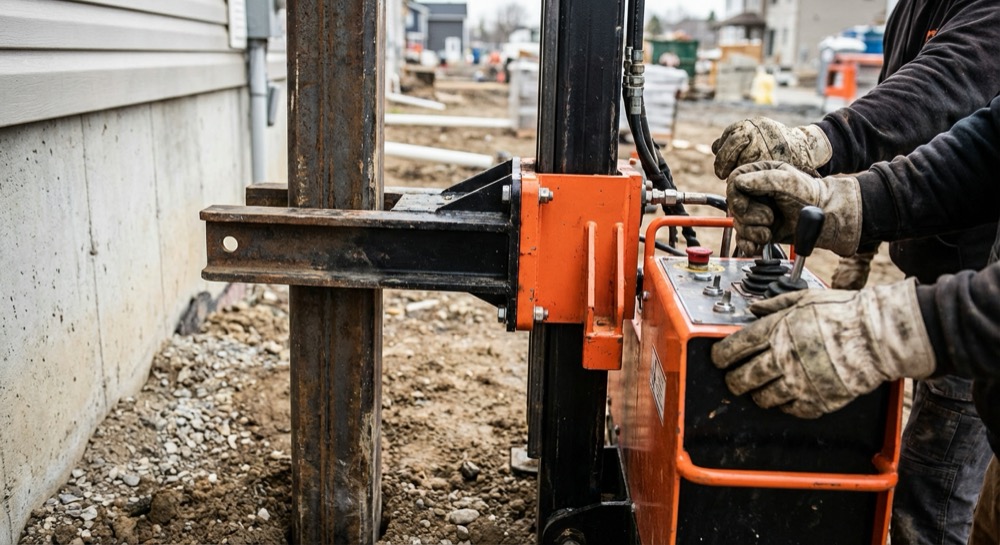
For severe settling, contractors drive steel or concrete pilings through the existing footings down to load-bearing soil or bedrock. Hydraulic jacks then lift the foundation to the correct elevation. This is the same technology used on slab foundations and provides the most permanent solution for settlement issues.
Typical cost: $800-$1,500 per piling
Mudjacking (Slabjacking)
If the concrete perimeter footing has settled, mudjacking pumps a cement slurry beneath it to raise it back to level. This is less common for pier and beam homes than for slabs, but it applies when the perimeter grade beam or porch slab needs correction.
Typical cost: $500-$1,500 per section
Not Sure What Your Foundation Needs?
Get free, no-obligation quotes from licensed foundation contractors in your area.
Get Free QuotesPier and Beam Foundation Repair Costs
Costs vary significantly based on the severity of damage, the repair method, your location, and the contractor. Here is what homeowners typically pay in 2026.
| Repair Type | Cost Range | What It Covers |
|---|---|---|
| Shimming (per pier) | $75 - $300 | Minor leveling adjustments on individual piers |
| Sistering joists (per joist) | $100 - $300 | Reinforcing damaged floor joists with new lumber |
| Pier replacement (per pier) | $250 - $500 | New concrete pier and footing installation |
| Adding support piers | $250 - $500 | Extra piers to reduce span between supports |
| Beam replacement (per beam) | $1,500 - $5,000+ | Full removal and replacement of structural beams |
| Pressed pilings (per piling) | $800 - $1,500 | Steel or concrete pilings driven to stable soil |
| Crawl space encapsulation | $3,000 - $8,000 | Full vapor barrier, insulation, and dehumidifier |
| Complete foundation rebuild | $10,000 - $40,000+ | Full pier, beam, and joist system replacement |
Most homeowners end up spending between $1,500 and $12,000 for pier and beam repairs. A typical job that involves re-leveling the home, replacing a few piers, and sistering several damaged joists runs $3,000 to $7,000. Major projects involving multiple beam replacements and new pilings can push well past $12,000.
Factors That Affect Cost
- Severity of damage: A few shifted piers cost far less to fix than widespread rot or structural failure across multiple beams.
- Accessibility: Crawl spaces with less than 18 inches of clearance require more labor time and may need excavation to create working room.
- Soil conditions: Expansive clay soils or high water tables require more substantial (and expensive) pier systems.
- Location: Labor rates vary by market. Foundation repair in Texas, Louisiana, and Florida tends to be lower than in California or the Northeast due to market competition.
- Contractor: Prices for the same job can vary 30-50% between contractors. This is why getting multiple quotes is critical.
Standard homeowner's policies typically do not cover foundation repair caused by settling, soil movement, or normal wear. However, if foundation damage results from a sudden, covered event -- like a burst pipe flooding the crawl space -- your policy may cover some of the repair costs. Always file a claim before signing a repair contract so you know where you stand.
Crawl Space Encapsulation and Moisture Control
If moisture is the root cause of your foundation problems -- and it frequently is -- fixing the structural damage without addressing the moisture source is treating symptoms, not the disease. The repair will fail again.
Crawl Space Encapsulation
Full encapsulation involves sealing the entire crawl space with a heavy-duty vapor barrier (typically 12-20 mil polyethylene) over the ground and walls, sealing all vents, and installing a commercial-grade dehumidifier. The goal is to transform the crawl space from an uncontrolled environment into a conditioned space with stable temperature and humidity.
Encapsulation costs $3,000 to $8,000 depending on the size of the crawl space and the scope of work. It is one of the highest-ROI improvements you can make on a pier and beam home because it protects against rot, mold, pests, and energy loss simultaneously.
Other Moisture Solutions
- Vapor barrier only: A basic 6-mil poly barrier over the soil reduces moisture transfer but does not provide full protection. Cost: $1,000-$3,000.
- French drain or sump pump: Routes standing water away from the crawl space. Essential if water pools beneath the house during heavy rain. Cost: $1,500-$4,000.
- Grading correction: Reshaping the soil around the foundation perimeter so water flows away from the house rather than toward it. Cost: $500-$3,000.
- Gutter repair or extension: Downspouts that dump water near the foundation wall are a common and easily fixed problem. Cost: $200-$800.
Concerned About Your Crawl Space?
Connect with local foundation specialists who can inspect and diagnose your crawl space issues.
Get a Free Inspection QuotePier and Beam vs. Slab Foundations
If you are buying a home or deciding on a foundation type for new construction, the choice between pier and beam versus slab has real implications for maintenance, cost, and long-term durability.
| Factor | Pier and Beam | Slab |
|---|---|---|
| Construction cost | Higher ($8,000-$15,000+ for new build) | Lower ($4,500-$12,000 for new build) |
| Repair access | Excellent -- crawl space allows direct access to plumbing, electrical, and structural members | Difficult -- plumbing and structural issues require breaking through the slab |
| Repair cost | Generally lower per repair because access is easier | Higher per repair due to tunneling or slab penetration |
| Flood resistance | Superior -- elevated structure reduces flood damage risk | Poor -- any flooding directly contacts living space |
| Energy efficiency | Lower without encapsulation -- air leaks through crawl space | Higher -- thermal mass of concrete helps regulate temperature |
| Pest vulnerability | Higher -- wood components in crawl space attract termites | Lower -- less exposed wood for pests to access |
| Best for | Flood zones, sloped lots, expansive soils, older homes | Flat lots with stable soil, budget-conscious new construction |
| Lifespan | 75-100+ years with maintenance | 80-100+ years with stable soil |
Neither foundation type is categorically better. Pier and beam gives you more repairability and flood protection. Slabs cost less upfront and require less ongoing maintenance in dry climates with stable soil. The best choice depends on your lot, your climate, and your tolerance for crawl space maintenance.
When to Repair vs. Replace the Foundation
Repair is almost always the right starting point. Foundation replacement -- lifting the entire house, demolishing the old foundation, and building a new one -- is a major undertaking that costs $20,000 to $100,000+ and disrupts your life for weeks or months. It is only warranted in specific circumstances.
Repair Is Usually Sufficient When:
- Damage is limited to a section of the foundation (a few piers or beams)
- Settling is moderate and can be corrected with shimming or pilings
- Wood damage is localized and has not spread to adjacent structural members
- The crawl space can be properly dried and protected going forward
- A structural engineer confirms that targeted repair will restore full integrity
Replacement May Be Necessary When:
- More than 50% of the beams and joists show significant rot or termite damage
- The original piers were inadequate (wrong spacing, undersized, or no footings) and the whole system is failing
- Previous repairs have failed multiple times and the foundation continues to settle
- You are converting from pier and beam to slab as part of a major renovation
- A structural engineer recommends full replacement based on their assessment
Before committing to major foundation work, pay for an independent structural engineer's report ($300-$800). This is not the same as the "free inspection" offered by foundation repair companies, who have a financial incentive to recommend work. An engineer's report gives you an unbiased assessment and protects you from unnecessary repairs.
Finding the Right Foundation Repair Contractor
Foundation repair is one of those trades where the difference between a good contractor and a bad one can cost you tens of thousands of dollars and years of headaches. Here is how to vet them properly.
Non-Negotiable Requirements
- Licensed and insured -- Verify their contractor's license with your state licensing board. Confirm they carry both liability insurance and workers' compensation.
- Written warranty -- Reputable companies offer transferable warranties of 20 years to lifetime on their pier and beam work. Get the warranty terms in writing before signing anything.
- At least 5 years in business -- Foundation repair requires experience with different soil types, construction methods, and failure modes. Newer companies lack this depth.
- BBB rating and reviews -- Check the Better Business Bureau, Google Reviews, and Yelp. Pay attention to how the company responds to complaints, not just the star rating.
Red Flags to Avoid
- High-pressure sales tactics or "today-only" pricing
- No written estimate or vague scope of work
- Demanding more than 10-15% deposit upfront
- Unwillingness to provide references from pier and beam jobs specifically
- No structural engineer on staff or willingness to work with your engineer
- Offering a price significantly lower than all other bids (cut-rate work often fails)
How Many Quotes to Get
Get a minimum of three quotes. Five is better for major work. This gives you enough data points to identify outliers and understand the fair market price. Expect a 30-50% spread between the lowest and highest bid -- if one quote is dramatically lower, be cautious.
Compare Foundation Repair Quotes
We connect you with licensed, vetted contractors in your area. Free, fast, and zero pressure.
Get Free Quotes NowQuestions to Ask Your Foundation Contractor
Walk into that first consultation prepared. These questions separate the professionals from the pretenders.
- What is causing the damage? -- A good contractor explains the root cause, not just the symptoms. If they jump straight to a solution without diagnosing the cause, they are guessing.
- What repair method do you recommend and why? -- They should be able to articulate why their recommended method is the best fit for your specific situation, soil type, and damage pattern.
- Do you recommend a structural engineer's report before proceeding? -- Honest contractors welcome third-party verification. Companies that discourage it may be inflating the scope of work.
- What is included in the warranty? -- Ask specifically: Does it cover labor and materials? Is it transferable to a new owner? What voids it? How long does it last?
- How will you address the moisture issue? -- If there is a moisture problem and the contractor only addresses structural damage without recommending drainage or encapsulation, the repair will likely fail again.
- What is the timeline and how will you protect my property? -- Expect 1-3 days for minor repairs, 1-2 weeks for major work. Ask about landscaping, dust control, and access points.
- What permits are required? -- In most jurisdictions, structural foundation work requires a building permit. A contractor who skips permitting is cutting corners.
- Can you provide three references from pier and beam jobs in this area? -- Generic references are meaningless. You want names of homeowners with pier and beam foundations who can speak to the quality and longevity of the work.
The Bottom Line
Pier and beam foundations are durable, repairable, and well-suited for many soil conditions and climates. But they require attention that slab foundations do not -- particularly when it comes to moisture management and pest prevention in the crawl space.
If you are noticing signs of foundation trouble -- uneven floors, sticky doors, or visible settling -- do not wait. Early repairs are dramatically less expensive and less disruptive than the structural work required once damage has progressed. Get an inspection, get multiple quotes, and make an informed decision with the data in front of you.