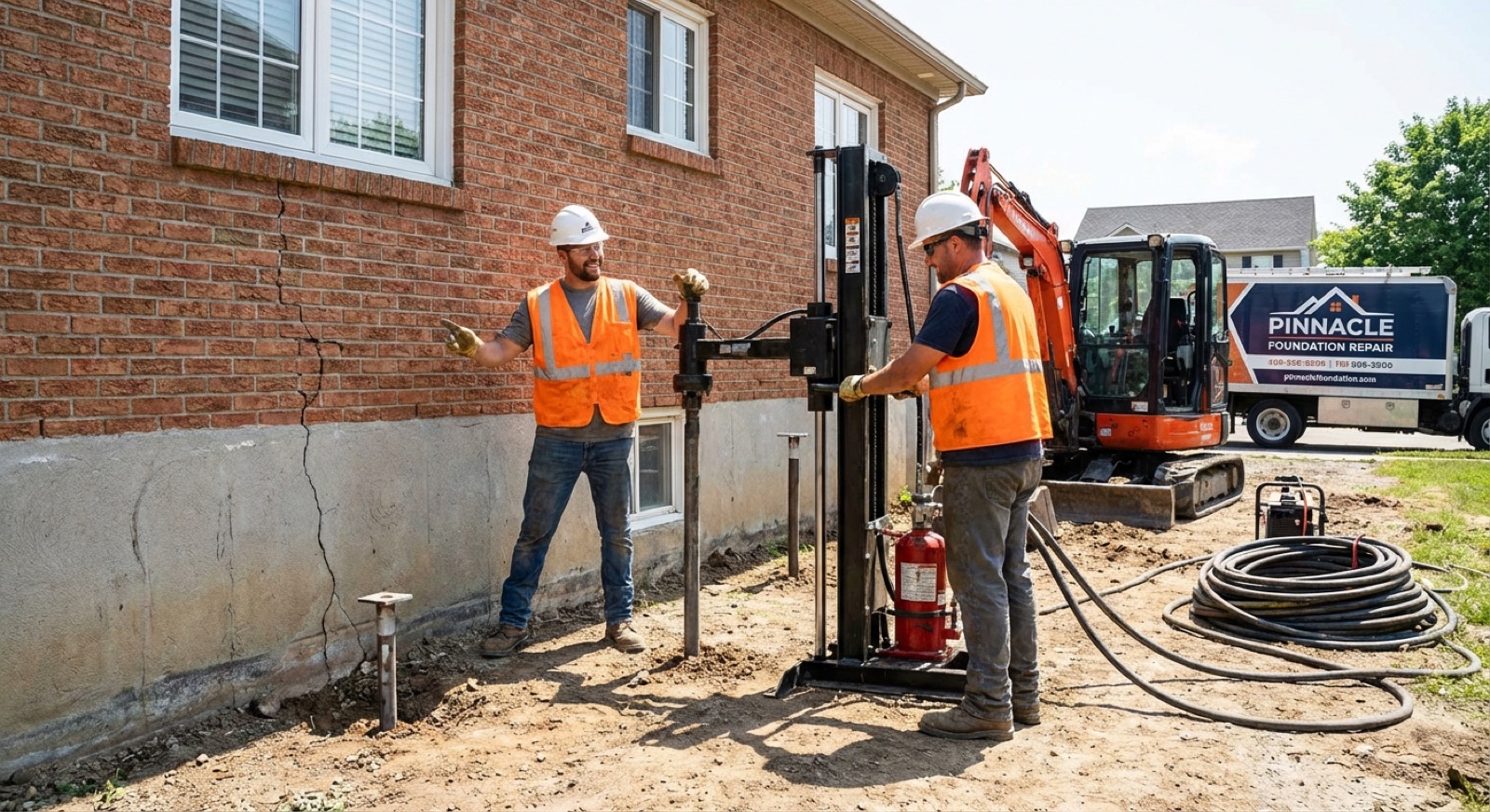
A foundation repair project can cost anywhere from $2,000 to $15,000 or more. For that kind of investment, the warranty you receive is not an afterthought -- it is a critical part of the deal. Yet most homeowners spend hours researching contractors and methods but barely skim the warranty language before signing.
That is a mistake. The wrong warranty -- or the wrong understanding of a good one -- can leave you paying for the same repair twice. This guide breaks down everything you need to know about foundation repair warranties: what the different types mean, how long they actually last, what can void them, and the specific questions to ask before you hand over a deposit.
A warranty is only as strong as the company standing behind it. Before comparing warranty lengths, verify the contractor's licensing, years in business, and whether their warranty is backed by a national manufacturer. A 25-year warranty from a company that has been in business for 3 years is not the same as one from a company with 20 years of track record.
Types of Foundation Repair Warranties
Not all warranties cover the same things. The language used in your contract determines exactly what the company is responsible for if something goes wrong. There are several distinct warranty types you will encounter, and understanding the differences is essential.
Manufacturer Warranty vs. Contractor Workmanship Warranty
These are two separate warranties that may (or may not) come with your repair:
- Manufacturer warranty: Covers defects in the materials themselves -- for example, a steel pier that corrodes prematurely or a helical anchor that fails under normal load conditions. This warranty is issued by the company that made the product (such as Foundation Supportworks or Ram Jack), not the company that installed it.
- Contractor workmanship warranty: Covers the installation and labor. If the pier was installed at the wrong depth, at the wrong angle, or the crew failed to reach load-bearing strata, this is the warranty that should protect you. This warranty is issued by the local contractor who performed the work.
The ideal scenario is receiving both. A contractor who uses manufacturer-backed products and provides their own separate workmanship guarantee gives you two layers of protection. If the product fails, the manufacturer covers it. If the installation was faulty, the contractor covers it.
Material Only vs. Labor + Material
Read the warranty document carefully for this distinction. A material-only warranty covers the cost of replacement products but does not cover the labor to remove the failed components and install new ones. Given that labor is often the largest expense in foundation work, a material-only warranty can leave you responsible for thousands of dollars in re-installation costs.
A labor-and-material warranty covers everything: new products plus the cost of the crew to come back and fix the problem. Always ask which type you are getting, and get the answer in writing.
Warranty Lengths by Repair Method
Warranty duration varies significantly depending on the repair method used. More permanent solutions generally come with longer warranties because the products themselves have longer expected lifespans.
- Steel push piers: Typically carry a lifetime or 25-year warranty. These are driven to bedrock or load-bearing strata and are considered the most permanent solution. National manufacturers like Foundation Supportworks warranty the product for the life of the structure.
- Helical piers: Usually lifetime or 25-year warranty. Like push piers, these are engineered solutions with predictable long-term performance. Most manufacturer-backed helical piers carry the same warranty as push piers.
- Concrete pressed pilings: Commonly 10 to 25 years, sometimes marketed as "lifetime." Pressed pilings are popular in Texas and the Southeast, but warranty terms vary widely between contractors. Pay close attention to exclusions.
- Mudjacking (slabjacking): Typically 1 to 3 years. Mudjacking is considered a shorter-term solution because the injected material can erode, wash out, or compress over time. Most contractors limit their warranty accordingly.
- Polyurethane foam injection (polyjacking): Usually 3 to 8 years. Poly foam is more durable than traditional mudjacking materials but still does not carry the same long-term guarantees as pier systems.
- Epoxy or polyurethane crack injection: Typically 1 to 5 years, often lifetime on the specific crack repaired. These warranties usually cover only the crack that was treated -- if a new crack appears nearby, it is considered a separate issue.
Transferability: Critical for Home Sales
If you plan to sell your home in the future -- and most homeowners eventually do -- warranty transferability is one of the most important terms to verify. A transferable warranty means the coverage passes to the next owner when the home is sold. A non-transferable warranty dies when you sell.
For home sellers, a transferable foundation repair warranty is a significant asset. It signals to buyers that the work was done by a reputable company with confidence in their repair. Many buyers will request documentation of past foundation work during the inspection period, and a transferable warranty can be the difference between a smooth closing and a price renegotiation.
Some things to know about transferability:
- Transfer fees: Some companies charge $100 to $500 to transfer a warranty to a new owner. Ask about this upfront.
- Transfer window: A few contractors require the transfer be initiated within 30 to 90 days of the sale. Miss the window and the warranty may lapse.
- One-time transfer vs. unlimited: Most warranties allow only one transfer. A small number allow unlimited transfers for the life of the warranty.
- National manufacturer warranties: These are typically transferable by default and often more straightforward to transfer than local contractor warranties.
When selling a home with previous foundation work, include a copy of the warranty in your seller's disclosure packet. Proactively providing this documentation builds buyer confidence and reduces the chance of repair-related price negotiations.
What Voids a Foundation Repair Warranty
Every warranty has exclusions. Knowing what can void your coverage before you sign is far better than finding out after something goes wrong. Here are the most common warranty killers:
- Improper drainage: This is the number one reason warranty claims get denied. If your gutters are not directing water away from the foundation, if the grading around your home slopes toward the house, or if you have no drainage system where one is recommended, most contractors will argue the failure was caused by external water issues -- not their work.
- Tree root encroachment: Large trees planted too close to the foundation can exert lateral pressure on walls and draw moisture from the soil, causing differential settlement. Many warranties specifically exclude damage attributed to root activity.
- Unauthorized modifications: If you (or another contractor) add to, remove, or modify the repaired foundation without the original company's written approval, the warranty may be voided. This includes adding rooms, cutting into the slab for plumbing, or altering grade beams.
- Failure to maintain: Some warranties require you to maintain specific conditions -- such as keeping gutters clean, maintaining consistent soil moisture, or running soaker hoses during drought. If you cannot demonstrate you followed these requirements, a claim may be denied.
- Acts of God or natural disasters: Earthquakes, floods, tornadoes, and other natural disasters are excluded from virtually every foundation repair warranty. If a covered event damages the repair, you would need to file a claim through your homeowner's insurance instead.
- New construction or additions: Adding load to the foundation (such as building a second story or a heavy addition) that was not part of the original engineering plan can void the warranty on the affected sections.
Some contractors include a drainage maintenance clause that is vaguely worded on purpose. If your warranty says "homeowner must maintain proper drainage," ask the contractor to define exactly what that means in writing -- specific gutter extension lengths, grading slopes, and moisture levels. Vague language gives the company room to deny claims.
The "Lifetime" Warranty Trap
The word "lifetime" on a foundation repair warranty does not always mean what you think it means. There are two very different definitions, and confusing them can cost you.
Product Lifetime vs. Company Lifetime
- Product lifetime (or structure lifetime): The warranty lasts for as long as the product is in service or for the life of the structure. If the repaired foundation is still part of a standing building 40 years from now, the warranty still applies. This is what most homeowners assume "lifetime" means.
- Company lifetime: The warranty lasts for as long as the issuing company is in business. If the contractor closes, merges, or files for bankruptcy, the warranty ends with them. A "lifetime" warranty from a 5-year-old company with thin margins is fundamentally different from one backed by a 40-year-old national brand.
Always ask: "Whose lifetime does this warranty refer to?" If the answer is the company's, that is not necessarily a dealbreaker -- but it should factor into your decision. A company-lifetime warranty from a well-established local firm with 25 years of continuous operation is still valuable. The same warranty from a startup contractor is a gamble.
Other "Lifetime" Fine Print
Some warranties marketed as "lifetime" include declining coverage. For example, the warranty might cover 100% of parts and labor for the first 10 years, 50% for years 11 through 20, and materials only after year 20. Technically still "lifetime" coverage, but the protection diminishes significantly over time. Read the schedule carefully.
What Happens If the Company Goes Out of Business
This is the question homeowners rarely think to ask, and it is one of the most important. The foundation repair industry has high turnover. Small contractors enter and exit the market regularly. If your warranty is held solely by a local company and they close shop, your warranty is effectively worthless -- you have no one to call and no entity to enforce the guarantee against.
There are a few ways to protect yourself:
- Choose a contractor with manufacturer backing. If your contractor is part of a national network like Foundation Supportworks or Ram Jack, the manufacturer stands behind the product warranty even if the local installer goes out of business. Another dealer in the network can service your warranty claim.
- Check for surety bonds. Some states require or allow foundation repair companies to carry surety bonds. If the company cannot fulfill its warranty obligations, the bond provides a pool of money to cover claims. Ask if your contractor is bonded.
- Verify years in business. A company that has operated continuously for 15 or more years under the same ownership is statistically more likely to be around for the duration of your warranty than a company that opened last year.
- Keep all documentation. Even if the company closes, your warranty contract is still a legal document. In some cases, if the company is acquired by another firm, the acquiring company may honor existing warranties. Having clear documentation makes this far more likely.
Comparing Contractors? Get Free Quotes.
Request quotes from vetted, licensed foundation repair companies in your area. Ask about warranties before you commit.
Get Free QuotesManufacturer-Backed Warranties: How They Work
Two of the largest names in the foundation repair product industry -- Foundation Supportworks and Ram Jack -- operate through networks of independently owned local contractors. Understanding how their warranty model works can give you added confidence (or help you ask better questions).
Foundation Supportworks
Foundation Supportworks manufactures steel push piers, helical piers, wall anchors, and drainage products. They distribute through a network of authorized dealers across the U.S. and Canada. When a Supportworks dealer installs their products, the homeowner typically receives:
- A product warranty from Foundation Supportworks (the manufacturer) covering material defects.
- A workmanship warranty from the local dealer covering installation quality.
If the local dealer goes out of business, the Supportworks product warranty remains valid. Another dealer in the network can inspect and service the warranty claim. This dual-layer approach is one of the strongest warranty structures available in residential foundation repair.
Ram Jack
Ram Jack operates on a similar model. They manufacture driven steel piers and helical piles and distribute through franchised contractors. Ram Jack's warranty covers the products, and the franchise covers the installation. Because Ram Jack maintains a national network, warranty service can be transferred to another franchise location if the original installer closes.
Not every contractor works with a national manufacturer. Many competent local companies manufacture or source their own piers. That does not automatically make their warranty inferior -- but it does mean the warranty is only as durable as the company itself. Ask directly: "Is your warranty backed by anyone other than your company?"
Warranty Comparison by Repair Method
| Repair Method | Typical Warranty | Transferable | Manufacturer Backed | Covers Labor |
|---|---|---|---|---|
| Steel Push Piers | Lifetime / 25 years | Yes | Usually | Yes (most) |
| Helical Piers | Lifetime / 25 years | Yes | Usually | Yes (most) |
| Concrete Pressed Pilings | 10 - 25 years | Varies | Rarely | Varies |
| Mudjacking | 1 - 3 years | Rarely | No | Varies |
| Polyurethane Foam Injection | 3 - 8 years | Varies | Sometimes | Varies |
| Epoxy Crack Injection | 1 - 5 years (per crack) | Rarely | No | Usually |
| Wall Anchors | Lifetime / 25 years | Yes | Usually | Yes (most) |
| Carbon Fiber Straps | Lifetime / 25 years | Yes | Usually | Yes (most) |
Note: Warranty terms vary significantly by contractor. This table represents industry averages, not guarantees. Always confirm the specific terms with your contractor in writing.
12 Questions to Ask Before Signing
Before you sign a contract, ask the contractor these questions and get the answers documented. If a salesperson cannot or will not answer them clearly, that tells you something about how they will handle a warranty claim down the road.
- Is this a product warranty, a workmanship warranty, or both? Who issues each one?
- Does the warranty cover labor and materials, or materials only?
- What is the exact warranty duration? If "lifetime," whose lifetime -- the product's, the structure's, or the company's?
- Is the warranty transferable to a future buyer? Is there a transfer fee or deadline?
- What specific conditions or actions would void the warranty?
- Are there maintenance requirements I must follow to keep the warranty valid? (Drainage, moisture, inspections, etc.)
- Is the warranty backed by a national manufacturer, or solely by your company?
- What happens to my warranty if your company closes, is acquired, or changes ownership?
- Does the warranty coverage decline over time (e.g., 100% first 10 years, then 50%)?
- What is the process for filing a warranty claim? How quickly do you respond?
- Are there any deductibles, service fees, or inspection charges for warranty work?
- Can I get the full warranty document to review before I sign the contract, not just a summary?
Get It in Writing: What the Warranty Document Should Include
A verbal warranty is worth the paper it is printed on. Every warranty promise should be documented in a separate written warranty certificate or clearly included in your signed contract. At minimum, the document should contain:
- Company name, address, and license number of the warranting party
- Property address where the work was performed
- Date of completion (the warranty start date)
- Exact warranty duration with start and end dates or triggering conditions
- Detailed description of the work performed -- methods used, number and location of piers, products installed
- What is covered (materials, labor, both) and what is specifically excluded
- Transferability terms -- whether it transfers, any fees, and the transfer process
- Maintenance obligations required to keep the warranty valid
- Claim procedure -- who to contact, expected response timeline, and how disputes are resolved
- Authorized signatures from both the company representative and the homeowner
Keep the original warranty document in a safe place along with your contract, invoices, before-and-after photographs, and any engineering reports. Digital copies stored in cloud storage are a smart backup. If you sell the home, provide the buyer with copies of everything.
Extended Warranty Add-Ons: Are They Worth It?
Some foundation repair companies offer extended warranty packages for an additional fee. These might extend coverage from 25 years to "lifetime," add labor coverage to a materials-only warranty, or extend transferability provisions.
Whether an extended warranty is worth the cost depends on your situation:
- Worth considering if the base warranty is materials-only and the add-on includes labor. Labor is the expensive part of any return visit, so closing that gap has real financial value.
- Worth considering if you are getting a shorter-duration method (like mudjacking or foam injection) and want to extend coverage from 3 years to 5 or more.
- Probably not worth it if you already have a lifetime product-and-labor warranty from a manufacturer-backed contractor. You are paying extra for coverage you already have.
- Probably not worth it if the extended warranty is offered by the contractor alone (not a third-party insurer) and the company has been in business for fewer than 10 years. The extension is only as durable as the company.
If you do purchase an extended warranty, make sure the terms are documented separately with the same level of detail as the primary warranty. Ask whether the extended coverage is underwritten by a third party or solely by the contractor.
Don't Settle for the First Quote
Compare warranty terms, pricing, and methods from multiple foundation repair companies near you.
Compare Free QuotesHow to File a Foundation Repair Warranty Claim
If you notice signs that the original problem is returning -- new cracks, doors sticking again, floors becoming uneven -- here is how to approach a warranty claim:
Step 1: Document the Problem
Before contacting the company, photograph and date-stamp the new symptoms. Measure and record crack widths, note which doors or windows are affected, and use a level on floors where you notice changes. This documentation establishes the timeline and severity, which strengthens your claim.
Step 2: Review Your Warranty
Pull out your warranty document and contract. Verify that your coverage is still active, that you have met all maintenance requirements, and that the issue you are experiencing falls within the scope of coverage. Note the claim procedure outlined in the document.
Step 3: Contact the Company in Writing
Call the company to initiate the claim, but follow up immediately with a written communication (email or letter) that includes your name, property address, original work order number, warranty document reference, description of the problem, and photographs. Written communication creates a paper trail that is important if the claim is disputed.
Step 4: Request a Documented Inspection
The company will typically send a technician or engineer to inspect the property. Request that they provide a written inspection report with their findings, including whether they believe the issue is covered under warranty. If they deny the claim, ask for the specific warranty clause they are citing as the basis for denial.
Step 5: Escalate if Necessary
If the contractor denies a claim you believe is valid, you have options. For manufacturer-backed warranties, contact the manufacturer directly. You can also file a complaint with your state's contractor licensing board, contact the Better Business Bureau, or consult with an attorney who handles construction disputes. In many states, contractors who fail to honor written warranties face penalties beyond the cost of the repair itself.
Do not hire a different contractor to redo the work before the original company has had a chance to inspect and respond. Bringing in a third party without the warranting company's knowledge or approval can void your coverage, even if your claim would have otherwise been valid.
The Bottom Line
A foundation repair warranty is part of what you are paying for when you hire a contractor. It deserves the same scrutiny as the repair method, the price, and the company's reputation. The strongest position you can be in as a homeowner is this: a written warranty document that covers both materials and labor, backed by a national manufacturer, with clear transferability terms, and issued by a contractor with a long track record in your area.
Get multiple quotes, compare the warranty terms side by side, ask the 12 questions above, and make sure everything is in writing before work begins. The time you spend reading the fine print now can save you thousands of dollars later.
Ready to Compare Foundation Repair Companies?
Get up to 3 free quotes from vetted, licensed contractors. Takes 60 seconds.
Get Free Quotes